01 Apr 2026
Travelers visiting India for the first time often search for a route that captures history, culture, architecture and local life within a short period. The Delhi Agra Jaipur tour by private car is widely known as the most balanced introduction to northern India because it connects three historically rich cities that reveal different layers of Indian civilization.
This route, commonly called the Golden Triangle tour, forms a triangle on the map linking Delhi, Agra and Jaipur. Each destination offers a different character. Delhi presents a combination of ancient empires and modern urban life. Agra showcases the Mughal architectural legacy including the famous Taj Mahal. Jaipur reveals the royal heritage of Rajasthan with magnificent forts, palaces and colorful bazaars.
Traveling through this route with a private car and driver in India makes the journey comfortable, flexible and far less stressful compared to relying on trains or domestic flights. A private vehicle allows travelers to stop whenever they wish, explore small towns along the way and experience the landscape beyond the major cities.
A carefully planned five-day itinerary allows enough time to experience the highlights without rushing. The journey combines historical landmarks, architectural wonders, cultural experiences and scenic drives across northern India.
Many travelers debate whether to travel by train, flight or road while exploring northern India. While trains are widely used and flights connect major cities quickly, the experience of traveling by road through the Golden Triangle provides a deeper understanding of the country.
A private driver in India offers several advantages. Comfort becomes the most obvious benefit because travelers avoid crowded stations and complex ticket bookings. A chauffeur handles navigation, local driving conditions and route planning while visitors simply enjoy the journey.
Road travel also allows travelers to experience the countryside between cities. Small villages, roadside tea stalls, agricultural landscapes and local markets provide glimpses into daily life that are impossible to see when traveling by plane.
Another advantage of a Golden Triangle tour by car is flexibility. Travelers can stop at interesting places along the highway, take photographs or visit lesser-known historical sites. This flexibility transforms a simple transfer between cities into an enriching travel experience.
Safety and convenience also play an important role. Foreign travelers often find that a trusted driver provides local insight, helps communicate with locals and assists with restaurant recommendations or cultural tips.
Ready to explore India’s most famous travel route? Enjoy a well-planned 5-day itinerary with private transport, expert guidance, and seamless travel between cities.
Chat On WhatsApp Contact UsThe Delhi Agra Jaipur itinerary follows a well-connected highway network that links the three cities with comfortable driving distances.
Delhi to Agra distance is roughly two hundred kilometers and takes about three to four hours depending on traffic. The route follows the modern Yamuna Expressway which provides a smooth and fast connection.
Agra to Jaipur distance is around two hundred forty kilometers and the journey usually takes four to five hours. This route passes through historical towns including Fatehpur Sikri, one of the most fascinating Mughal cities in India.
Jaipur to Delhi distance is approximately two hundred seventy kilometers with a driving time of five to six hours through the Rajasthan countryside.
This triangular route forms the backbone of the Golden Triangle India tour, making it one of the most popular travel circuits for international visitors.
The journey usually begins in Delhi, the capital of India and one of the oldest continuously inhabited cities in the world. Layers of history exist throughout the city, reflecting the influence of multiple empires that ruled northern India over centuries.
Travelers arriving in Delhi are immediately introduced to a city where modern skyscrapers stand beside ancient monuments. Wide avenues, bustling markets and historic mosques create a fascinating contrast between the past and present.
Exploring Old Delhi reveals narrow streets filled with vibrant markets, traditional food stalls and centuries-old architecture. Chandni Chowk, one of the most famous bazaars in India, offers a glimpse into the trading culture that has existed here for hundreds of years.
The majestic Red Fort, built by the Mughal emperor Shah Jahan, represents one of the most important historical landmarks in India. Nearby stands Jama Masjid, one of the largest mosques in the country, where visitors can climb the minaret for panoramic views over Old Delhi.
Moving toward New Delhi, the atmosphere becomes more spacious and organized. Wide boulevards, government buildings and colonial architecture dominate this area. India Gate, the President’s House and Parliament House form the political heart of modern India.
Another remarkable site is Humayun’s Tomb, a UNESCO World Heritage monument that inspired the architectural design of the Taj Mahal. The peaceful gardens surrounding the tomb create a beautiful contrast with the busy city outside.
Delhi serves as the perfect introduction to India before travelers begin their road journey toward Agra.
The road journey from Delhi to Agra begins early in the morning. The Delhi Agra road trip follows the Yamuna Expressway, one of the best highways in India. This smooth six-lane highway significantly reduces travel time and provides a comfortable driving experience.
During the drive, travelers notice how quickly the urban landscape of Delhi transforms into rural northern India. Fields of wheat, mustard and vegetables stretch across the horizon, reflecting the agricultural richness of the region.
Reaching Agra marks the second stage of the Golden Triangle tour by private car. This historic Mughal city attracts millions of travelers each year because it houses one of the most famous monuments on Earth.
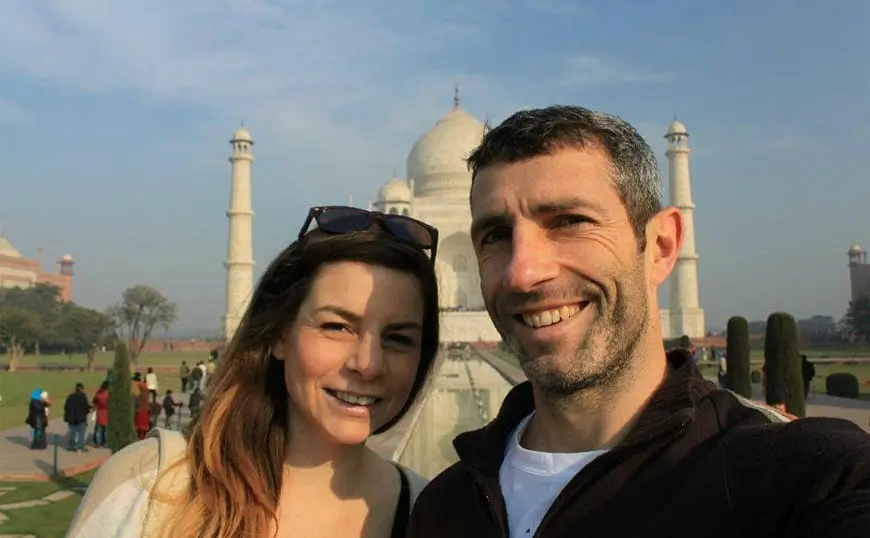
Agra’s identity is inseparable from the breathtaking Taj Mahal, a monument built by Emperor Shah Jahan in memory of his beloved wife Mumtaz Mahal. Constructed entirely from white marble, the Taj Mahal stands as a symbol of eternal love and architectural perfection.
Visitors often arrive at sunrise when the soft morning light creates a magical reflection on the marble surface. As the sun rises, the monument gradually changes colors, shifting from pale pink to bright white.
The Taj Mahal complex includes gardens, reflecting pools and intricate marble carvings decorated with precious stones. Walking through the symmetrical gardens allows travelers to appreciate the extraordinary craftsmanship that went into building this masterpiece.
Agra is also home to the impressive Agra Fort, another UNESCO World Heritage monument. This massive red sandstone fortress once served as the main residence of the Mughal emperors. Inside the fort, visitors explore royal palaces, courtyards and balconies that overlook the Yamuna River and the Taj Mahal in the distance.
A visit to Agra is incomplete without experiencing local Mughlai cuisine. Restaurants throughout the city serve dishes inspired by royal kitchens of the Mughal era, including aromatic curries and traditional breads baked in clay ovens.
The journey from Agra to Jaipur introduces travelers to another historical treasure along the route. Approximately forty kilometers from Agra lies Fatehpur Sikri, a beautifully preserved Mughal city built by Emperor Akbar.
Fatehpur Sikri once served as the capital of the Mughal Empire before being abandoned due to water shortages. Today the city remains remarkably intact, allowing visitors to explore royal palaces, mosques and courtyards exactly as they existed centuries ago.
The towering Buland Darwaza, the largest gateway in the world, stands at the entrance of the complex and symbolizes the grandeur of Mughal architecture. Walking through the sandstone structures of Fatehpur Sikri feels like stepping into a historical time capsule.
Continuing the drive toward Jaipur, the landscape gradually changes as travelers enter Rajasthan. Dry desert terrain, colorful villages and traditional Rajasthani architecture begin to appear along the road.
Jaipur, the capital of Rajasthan, is often called the Pink City because many buildings in the historic center are painted in shades of pink terracotta. Founded in the eighteenth century by Maharaja Sawai Jai Singh II, Jaipur was carefully designed according to traditional Indian architectural principles.
The city combines royal heritage, vibrant culture and impressive architecture. Grand forts overlook the surrounding hills while bustling bazaars fill the streets below.
One of the most iconic landmarks in Jaipur is the Amber Fort, located on a hill just outside the city. Built with red sandstone and marble, the fort features magnificent courtyards, mirror-decorated halls and panoramic views of the surrounding hills.
The City Palace complex sits at the heart of Jaipur and still serves as the residence of the royal family. Within the palace visitors discover museums displaying royal costumes, weapons and artwork from the Rajput era.
Another architectural marvel is the Hawa Mahal, also known as the Palace of Winds. This five-story structure features hundreds of small windows that allowed royal women to observe street festivals without being seen.
Jaipur’s lively markets provide opportunities to explore local crafts including textiles, jewelry, pottery and traditional Rajasthani artwork.
Sit back and relax as you explore Delhi, Agra, and Jaipur in a private car with a professional driver. Enjoy hassle-free travel, flexible sightseeing.
Chat On WhatsApp Contact UsAfter exploring Jaipur, the final stage of the Delhi Agra Jaipur tour by private car involves returning to Delhi. The road journey passes through Rajasthan’s countryside where travelers often see camel carts, rural villages and colorful roadside markets.
The return drive allows visitors to reflect on the diversity of experiences encountered throughout the journey. From the imperial Mughal monuments of Agra to the royal palaces of Jaipur and the dynamic capital city of Delhi, the Golden Triangle route reveals the cultural depth of northern India.
Arriving back in Delhi marks the completion of a remarkable journey that combines history, architecture and cultural exploration.
Weather conditions influence travel comfort throughout northern India. The months between October and March generally provide the most pleasant climate for exploring the Golden Triangle tour by car.
During this period, temperatures remain moderate and sightseeing becomes comfortable throughout the day. The cooler winter months also create beautiful lighting conditions for photography, particularly around sunrise and sunset.
Travel during summer is possible but temperatures in Rajasthan and Agra can become very high. Early morning sightseeing and air-conditioned vehicles help maintain comfort during warmer months.
The Delhi Agra Jaipur itinerary remains the most recommended route for travelers visiting India for the first time because it offers a balanced introduction to the country.
Within just a few days, travelers experience ancient empires, Mughal architecture, Rajput royal heritage and vibrant modern culture. The journey also introduces visitors to India’s diverse landscapes, from bustling metropolitan streets to quiet desert regions.
Traveling with a private driver in Rajasthan and North India ensures the journey remains comfortable, flexible and culturally enriching.
Yes, the Golden Triangle route can be started from any of the three cities depending on travel plans.
Many travelers hire local guides at major monuments while relying on a private driver for transportation.
Jaipur combines Rajput royal architecture, vibrant markets and historic forts within a carefully planned city layout.
The Taj Mahal remains closed on Fridays for regular prayers.
The drive along the Yamuna Expressway usually takes about three to four hours.
Yes, the itinerary can easily be extended to include destinations such as Ranthambore, Mandawa or Udaipur.
The months between October and March offer the most comfortable weather conditions for sightseeing.
Traveling with a professional private driver in India is considered one of the safest and most convenient ways to explore the region.
Delhi to Agra is about two hundred kilometers, Agra to Jaipur around two hundred forty kilometers, and Jaipur to Delhi roughly two hundred seventy kilometers.
Five days allows travelers to see the main highlights of the Golden Triangle comfortably without rushing between cities.