04 May 2026
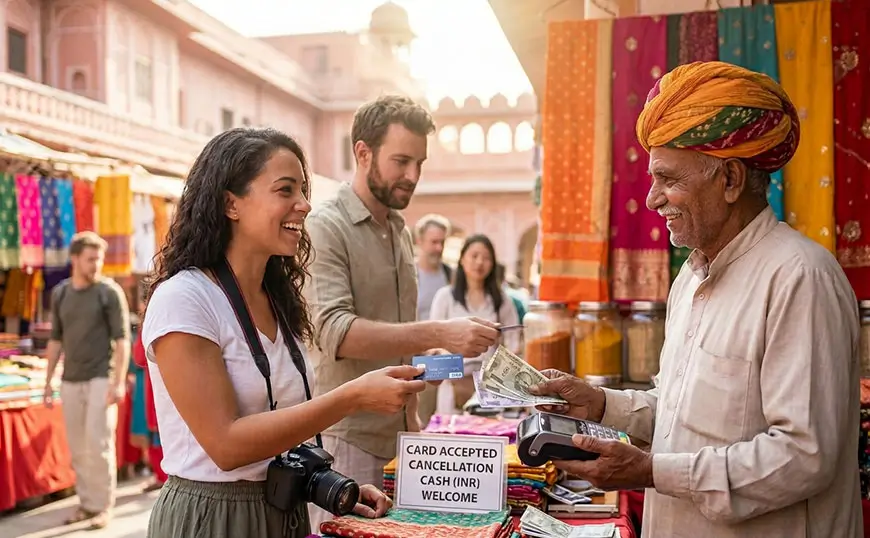
When traveling to a new country, one of the most important practical questions revolves around money—specifically how to pay for everyday expenses. In India, this question becomes even more relevant because the country operates on a mixed payment ecosystem. Some places are fully digital, while others still rely heavily on cash. This creates confusion for first-time visitors trying to understand cash vs card in India and what actually works in real situations.
India has rapidly adopted digital payments in recent years, especially in urban areas. Credit cards, debit cards, and mobile payments are widely accepted in hotels, restaurants, and organized travel services. At the same time, cash remains essential for smaller transactions, local markets, and certain types of transportation.
For tourists, this dual system means that relying entirely on one method of payment is not practical. Instead, a balanced approach works best. Understanding where and when to use each option allows you to travel smoothly without facing unexpected challenges.
Despite the growth of digital payments, cash continues to play an important role in everyday transactions. Many small businesses, street vendors, and local service providers prefer cash due to its simplicity and immediate usability.
When visiting local markets, purchasing souvenirs, or buying items from street shops, cash is often the preferred method. These environments are where cash usage in India for tourists becomes essential. Even if digital options are available, they may not always be reliable or convenient.
Transportation is another area where cash is commonly used. While app-based services accept digital payments, local taxis, auto-rickshaws, and smaller operators may prefer cash transactions. Having small denominations available makes these interactions easier and faster.
In rural areas or smaller towns, cash becomes even more important. Digital infrastructure may not be as consistent, and relying on cards alone can create difficulties. Carrying sufficient cash ensures that you are prepared for these situations.
Using the right mix of cash, cards, and digital payments can make traveling in India easier. Avoid ATM stress, card issues, and payment confusion during your journey.
In contrast to cash-dependent environments, there are many places in India where digital payments are widely accepted. Hotels, especially mid-range and luxury properties, accept credit and debit cards without any issues. Restaurants, cafes, and shopping malls also operate on fixed pricing systems and support card payments.
For organized travel services such as car rental with driver in India, payments are often made through secure digital methods. This adds convenience and transparency, especially for international travelers.
Online bookings for hotels, tours, and transportation are also completed using cards or digital payment platforms. This makes it easier to plan your trip in advance without worrying about carrying large amounts of cash.
Understanding these distinctions helps you decide when to rely on cards and when to switch to cash, ensuring a smoother travel experience.
While cards are widely accepted in many places, there are still certain challenges that travelers may encounter. One common issue is card machine availability. Smaller establishments may not have the necessary infrastructure to process card payments, especially in less urban areas.
Another challenge is international card compatibility. Some cards may not work seamlessly due to bank restrictions or security settings. Informing your bank before traveling can help avoid such issues and ensure uninterrupted access to your funds.
Transaction fees are another factor to consider. Using international cards may involve additional charges, which can increase your overall expenses. Understanding these card payment charges in India helps you manage your budget more effectively.
Connectivity issues can also affect digital payments. In areas with unstable internet connections, card transactions may fail or take longer to process. Having cash as a backup ensures that you are not inconvenienced in such situations.
Carrying cash is necessary, but it also requires careful handling. Safety is an important consideration, especially when traveling in unfamiliar environments. The key is to carry only what you need for the day and keep the rest securely stored.
Using a combination of wallets or secure pouches helps distribute your cash and reduces risk. Avoid displaying large amounts of money in public places, as this can attract unnecessary attention.
Understanding cash safety for tourists in India ensures that you can use cash confidently without worrying about security. Most travelers do not face issues when they follow basic precautions and remain aware of their surroundings.
The most effective strategy for managing payments in India is to use a balanced approach. Relying entirely on cash can be inconvenient, while depending only on cards can create limitations in certain situations.
A combination of both methods allows you to adapt to different environments. Use cards for larger expenses such as hotels and organized services, and keep cash for smaller transactions and local purchases.
Planning your daily expenses and withdrawing cash as needed helps maintain this balance. This approach ensures that you are always prepared, regardless of where you are traveling.
The way you manage payments has a direct impact on your overall travel experience. Smooth transactions reduce stress and allow you to focus on exploring rather than dealing with financial issues.
Using the right payment method in the right situation also helps you avoid delays and misunderstandings. For example, paying with cash in local markets speeds up transactions, while using cards in hotels ensures convenience and security.
Understanding payment methods in India for tourists enhances your confidence and makes your journey more enjoyable.
Many travelers are surprised by where cards work — and where they don’t — in India. This guide helps tourists handle money safely while exploring the country.
Preparation is the key to avoiding payment-related issues. Inform your bank about your travel plans to prevent card blocks. Carry a mix of payment options, including cash, cards, and possibly a backup card.
Keeping track of your expenses and monitoring transactions helps you stay within your budget. Being aware of exchange rates and transaction fees ensures that you are not overpaying.
Simple steps like these make a significant difference and allow you to handle payments smoothly throughout your trip.
For first-time visitors, the combination of cash and digital payments can feel confusing. The contrast between modern urban systems and traditional local practices creates a unique environment that requires adjustment.
However, once you understand how the system works, it becomes easier to navigate. The flexibility of having multiple payment options is actually an advantage, allowing you to choose what works best in each situation.
Adapting to this system is part of the overall travel experience, and it adds to the uniqueness of exploring India.
Use a combination of cash and cards, plan your expenses, and keep backup options available.
Yes, there may be transaction fees depending on your bank and card type.
Yes, ATMs are widely available in cities and towns, but it is advisable to plan withdrawals in advance.
Many local transport options prefer cash, though app-based services may accept digital payments
Yes, if you follow basic precautions such as not displaying large amounts and keeping money secure.
Carry enough for daily expenses while keeping the rest securely stored to reduce risk.
Issues may include card compatibility, transaction fees, and lack of card machines in smaller location
They are accepted in many urban areas, hotels, and restaurants, but may not work everywhere, especially in smaller establishments.
Yes, especially in local markets, small shops, and certain transportation services where digital payments may not be available.
A balanced approach works best. Use cards for hotels and major services, and carry cash for local markets and smaller transactions.